
The Kindergarten at ARISTO provides a carefully planned, stimulating environment for children between the age of 3 and 6, which will help them develop an excellent foundation for creative learning.
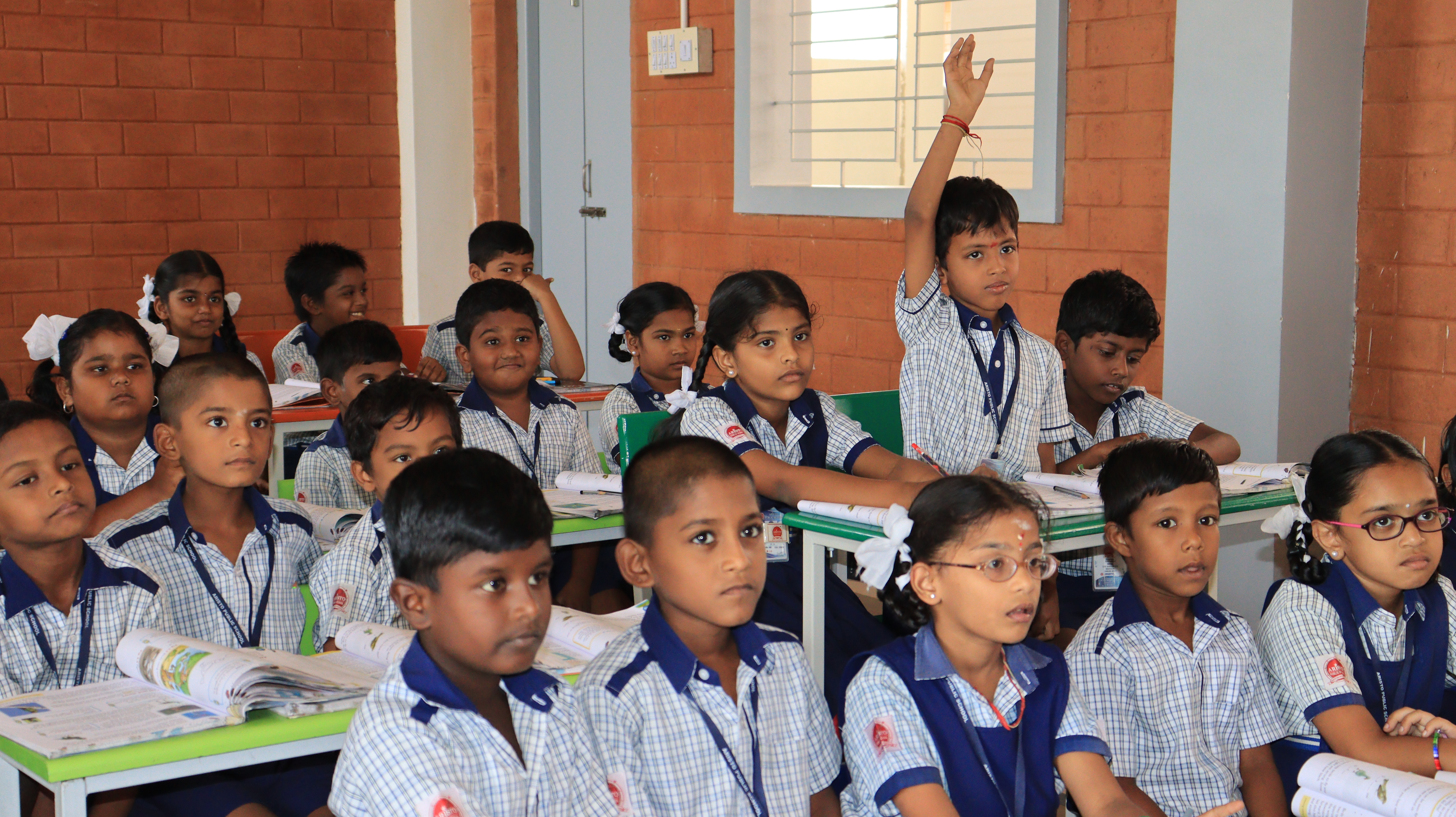
The school follows a combination of progressive Montessori and traditional curriculum which is age appropriate and uses English as the medium of instruction. Early Childhood Care and Education (ECCE) are today acknowledged as a crucial input and as a foundation for lifelong development. In our country it is also essential to realize the goal of universal elementary education. A common basic curriculum for the young child must be developmentally appropriate and activity-based, with equitable quality for diverse environments.
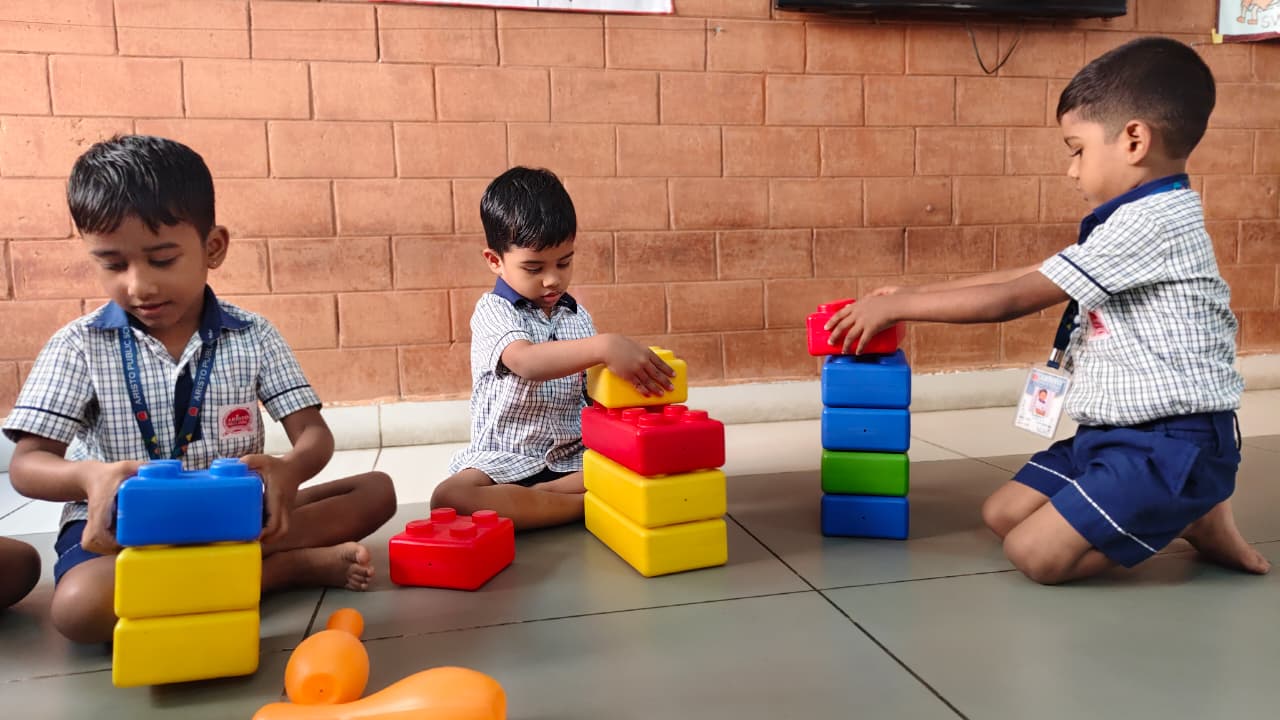
Used to increase small muscle development. This may include manipulating puzzles, drawing, coloring, painting, beading, and manipulating print materials..
Used in our interactive learning environment. This includes the engagement with peers, adults, and activities.
Used in our interactive environment. This may include running, jumping, climbing, and playing, along with structured outdoor time..
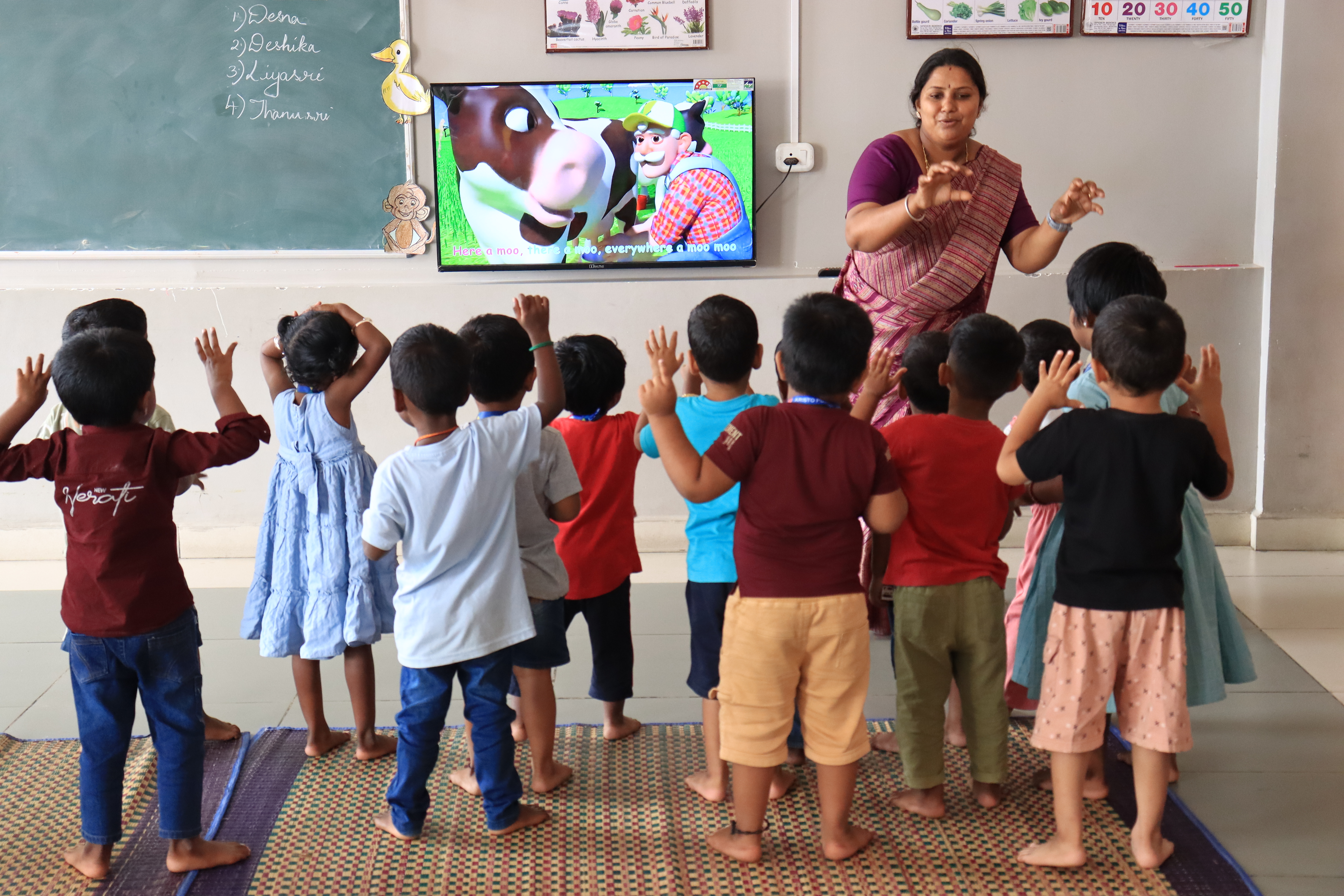
Used to promote active learning experiences. This will be done by the use of many dramatic play experiences such as pretend play and role playing.
Used to increase all developmental areas. This may include phonological awareness, vocabulary knowledge, problem solving, creative planning, number concepts, and peer interactions.
Used to increase positive self-concepts. This may include the importance of human relationships such as peer interactions and adult/child interactions. This also includes peer negotiations, the ability to make choices and how to properly interact with others.
A full day program within a developmentally appropriate classroom environment
Development of social skills is emphasized in order to create and sustain a successful learning environment within the classroom
Strong focus on phonetic sounds and letters of the alphabet, as well as the recognition and rote counting of numerals 1-10
Curriculum integration centered on monthly thematic units.
Numerous opportunities for drama, arts and crafts, free play, construction, as well as fine and gross motor development
Implementation of small group, large group and independent learning activities, designed to meet the needs of all students in diverse and creative ways.
A variety of materials and resources are provided for children to explore and use both in learning activities and in imaginative play.
Pre-reading development emphasizing letter recognition, hearing and manipulating the sounds in our language (phonemic awareness).
Children’s performance, behavior, social development, and physical health are observed and evaluated.
Language and literacy will be enhanced by having fun with language by listening to stories and poems, making up stories and rhymes, participating in sharing times, and role playing.
Math skills are supported through many activities dealing with classification, sequencing, counting, and experimenting with spatial relations.